

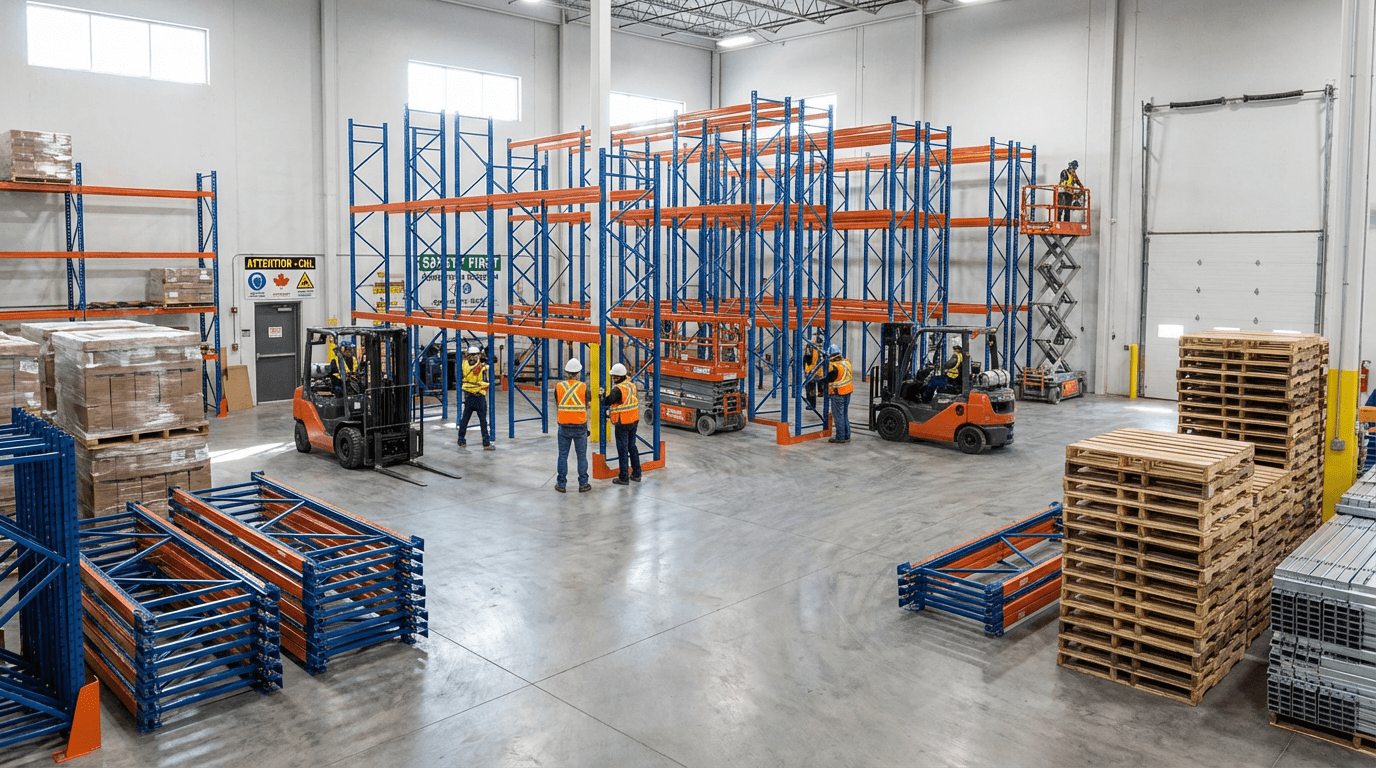
Mezzanine racks are an increasingly popular storage solution in warehouses and industrial settings, designed to maximize vertical space without expanding the building’s footprint. For those new to warehouse management or storage system design, understanding mezzanine racks can provide insight into how businesses optimize storage capacity and improve workflow efficiency. This article introduces the fundamental concepts behind mezzanine racks and why they have become essential in storage solutions.
Understanding Mezzanine Racks
Mezzanine racks are structural storage systems that create additional elevated floor levels within a warehouse or industrial facility. These racks act like intermediate floors or platforms, allowing for multi-tier storage and workspace areas above the ground level. Typically constructed from steel or other heavy-duty materials, mezzanine racks support heavy loads and can be customized to fit specific space and inventory needs. They differ from traditional pallet racks by integrating horizontal decking with vertical racking, effectively multiplying usable floor area vertically.
Importance of Mezzanine Racks
The importance of mezzanine racks lies in their ability to significantly increase storage density without requiring costly warehouse expansions. By utilizing otherwise unused vertical space, businesses can store more inventory, improve organization, and enhance access to products. This increased efficiency supports better inventory management, faster order fulfillment, and optimized use of facilities. In environments where space is at a premium or expansion options are limited, mezzanine racks provide a practical solution to meet growing storage demands and operational needs.
Common Misunderstandings and Challenges
A common misunderstanding about mezzanine racks is assuming they are simply shelving added at height. However, mezzanine systems involve structural engineering considerations for load-bearing capacity and safety compliance. Beginners often overlook the importance of assessing floor loading limits and local building codes, which can lead to installation issues. Another mistake is underestimating the need for proper safety features like guardrails, stairways, and load distribution planning. Additionally, neglecting maintenance and inspection routines can reduce the lifespan and safety of mezzanine racks.
Current Trends in Mezzanine Rack Systems
Current trends in mezzanine rack systems highlight increasing customization and modular design to accommodate diverse inventory types and evolving warehouse layouts. Automation integration, such as conveyors and shuttle systems within mezzanine levels, is gaining traction to boost picking speed and reduce manual labor. Sustainability considerations are also influencing material choices and installation methods. Furthermore, there is a growing emphasis on compliance with updated safety standards and building regulations, reflecting an industry-wide focus on long-term durability and operational safety.
Types of Mezzanine Racking Solutions
Mezzanine racking solutions can be broadly categorized into three main types: structural mezzanine racks, modular mezzanine systems, and integrated automation mezzanine solutions. Structural mezzanine racks focus on creating robust, fixed elevated platforms using steel frameworks designed for heavy loads and permanent installation. Modular mezzanine systems offer flexible configurations that can be adapted or expanded as inventory needs change, often featuring prefabricated components for ease of assembly and reconfiguration. Integrated automation mezzanine solutions combine mezzanine platforms with conveyors, shuttle systems, or robotic picking technologies to streamline workflow and improve operational efficiency in high-volume warehouses.
| Feature | Structural Mezzanine | Modular Mezzanine | Automated Mezzanine |
|---|---|---|---|
| Customization Flexibility | Low to Medium | High | Medium |
| Installation Complexity | High | Medium | Very High |
| Scalability | Limited once installed | High, easily reconfigurable | Medium, depends on automation |
| Load Capacity | Very High | Moderate to High | High |
| Integration with Automation | Limited | Possible | Built-in |
| Cost of Implementation | Typically higher upfront | Moderate | Highest |
| Maintenance Requirements | Standard structural upkeep | Potentially lower | Requires specialist upkeep |
| Safety and Compliance | Structurally engineered | Engineered to meet codes | Includes automated safety features |
| Best Use Cases | Stable inventory loads, permanent setups | Growing or evolving inventory needs | High throughput distribution centers requiring efficiency |
Evaluation Criteria for Selecting Mezzanine Racks
When selecting a mezzanine racking solution, consider the following evaluation criteria: Structural Load Requirements—evaluate the weight and density of stored inventory to ensure the mezzanine system can support it safely. Space Utilization Goals—assess how much vertical space is available and how multi-level storage can maximize capacity without compromising safety or workflow. Flexibility and Scalability—the need for future expansion or reconfiguration based on changing business demands. Integration Needs—whether automation such as conveyors, shuttles, or robotic systems are planned to improve picking and material handling. Compliance and Safety—conformity with current building codes, OSHA standards, and local regulations, as well as the inclusion of necessary safety features like guardrails, fire suppression, and structured access points. Installation Complexity and Downtime—the potential impact on warehouse operations during installation and the required expertise level for assembly. Maintenance and Long-Term Durability—anticipated upkeep efforts and how expected lifecycle costs align with operational budgets. Budget constraints—balancing upfront investment with long-term value and operational savings.
Case Study: Modular Mezzanine Rack Implementation
A mid-sized third-party logistics provider in the northeastern United States deployed a modular mezzanine rack system to address limited floor space while anticipating rapid inventory growth. By selecting prefabricated components, the company was able to reduce installation time by 30% compared to traditional structural mezzanines. Additionally, they integrated conveyor lines on the mezzanine to accelerate order picking. This solution provided them with scalable vertical storage capacity and improved workflow efficiency without the need for building expansion. The client reported a 40% increase in storage utilization and notable gains in order processing speed six months post-installation.
Frequently Asked Questions (FAQs)
Q1: How do mezzanine racks differ from traditional pallet racks in terms of installation and use?
A1: Mezzanine racks create additional elevated floor space combining decking and vertical supports, often requiring structural engineering and compliance with building codes, whereas pallet racks primarily provide vertical storage within a single floor level.
Q2: Can mezzanine racks be reconfigured after installation?
A2: Modular mezzanine systems are designed for greater flexibility and can be expanded or reconfigured, while traditional structural mezzanines tend to be permanent installations.
Q3: What safety considerations are critical when choosing mezzanine racks?
A3: Key considerations include load-bearing capacity, guardrails, stairways, emergency egress, compliance with local and federal regulations, and maintenance to ensure long-term structural integrity.
Q4: Are mezzanine racks compatible with warehouse automation technologies?
A4: Yes, many modern mezzanine systems can integrate conveyors, shuttle systems, and robotic picking solutions to enhance operational efficiency, but this often requires additional planning and budget.
Q5: How does one evaluate if a mezzanine rack is right for a warehouse?
A5: Evaluate current and projected storage needs, available vertical space, inventory types, budget constraints, and the potential for automation integration alongside compliance with safety codes.
About Success Installations
Success Installations stands apart as the premier mezzanine racking service provider across North America due to our unparalleled combination of industry-leading expertise and direct manufacturer partnership with North American Steel. Led by founder Peter Boland, with over 20 years of experience and a decade in senior roles at NAS, we offer a certified, professional crew dedicated to precision, safety, and adherence to compliance standards. Our hands-on approach ensures clients receive transparent communication and personalized solutions tailored to maximize space utilization and operational efficiency, whether through structural, modular, or integrated automation mezzanine systems. Trusted by industry giants like Ford and Mercedes, we deliver robust, scalable installations that seamlessly integrate with warehouse workflows to support your evolving business needs confidently.
Pricing and Value Proposition
Our pricing reflects a holistic value-driven approach focused on delivering long-term operational benefits and risk mitigation rather than just upfront costs. Partnering directly with North American Steel enables us to provide durable, certified materials engineered to withstand heavy loads and demanding environments, significantly reducing maintenance and replacement expenses over time. Additionally, our turnkey service—from design consultation through to automation integration and post-installation support—minimizes installation downtime and hidden costs, protecting your investment and streamlining your project timeline. By prioritizing scalability and compliance within your budget, we ensure the most effective mezzanine racking solutions that align with your warehouse’s unique requirements and growth plans.
Why Choose Success Installations?
Choosing Success Installations guarantees expert oversight from initial project assessment through installation completion, led personally by industry veteran Peter Boland to ensure accountability and precision. We mitigate operational risks with rigorous safety compliance, fully certified crews, and quality-assured materials sourced from NAS. To further reduce your investment risk, we offer comprehensive project transparency with status updates and post-installation inspections. Our ongoing maintenance and inspection services extend the lifespan of your mezzanine racking, ensuring sustained safety and performance. With a strong track record in large-scale projects across demanding environments, we stand behind the reliability and durability of every installation—giving you peace of mind from day one.
Contact Information
Ready to optimize your warehouse storage with trusted mezzanine racking solutions? Contact Success Installations today at (613) 790–9112 to speak directly with Peter Boland or email sales@successinstallations.com for a customized consultation. Let us help you design and implement a scalable, safe, and efficient storage system tailored to your business needs. Don’t wait—get your project started with North America’s leading racking installation provider now.
