
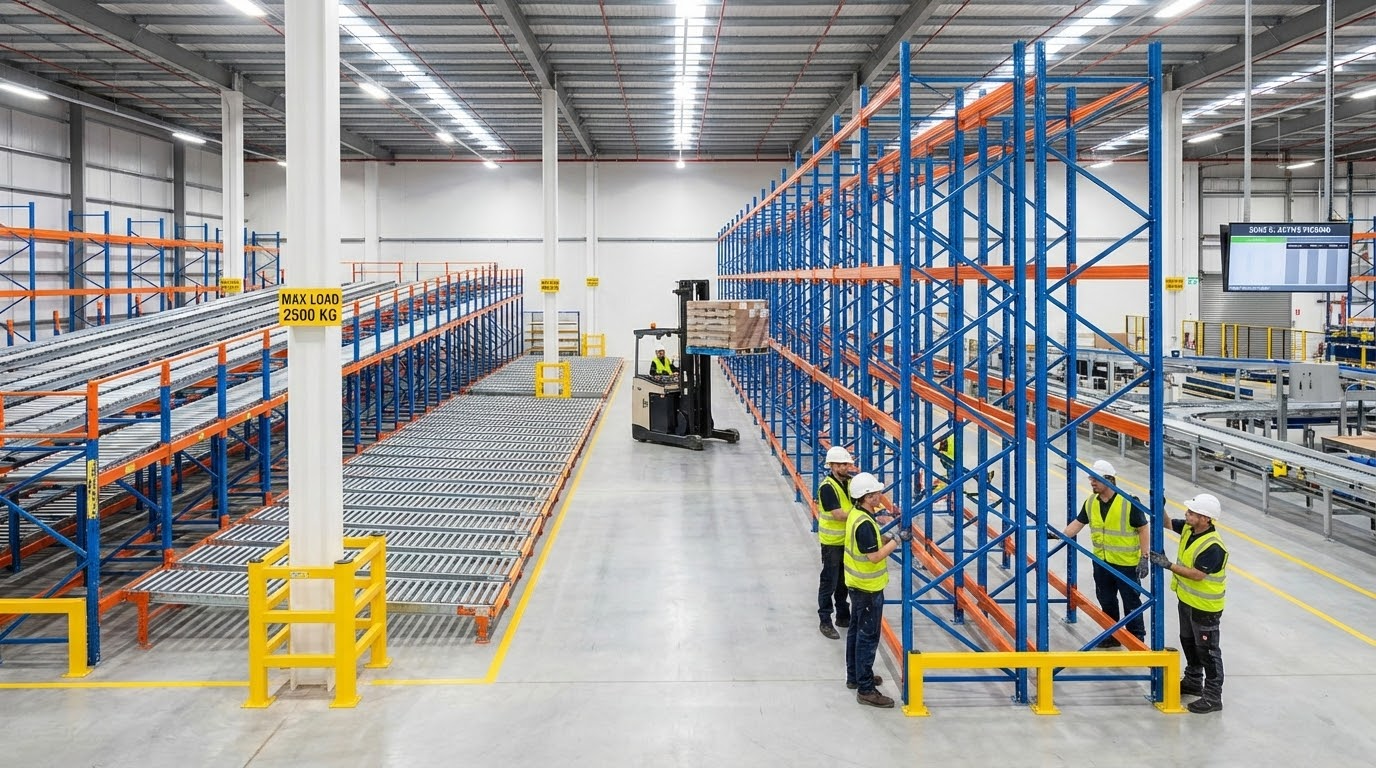
Pallet racking is an essential component of modern warehouse storage, designed to hold palletized goods safely and efficiently. If you’re new to warehouse storage solutions, understanding pallet racking is the first step toward optimizing your storage space and improving operational workflows. This article introduces the fundamental concepts of pallet racking, what it entails, and why it matters for businesses handling inventory and materials.
What is Pallet Racking?
Pallet racking is a structural framework made of steel that stores materials on pallets, allowing forklifts or other equipment to access and manage inventory vertically and horizontally. The system consists of upright frames and cross beams that create multiple levels of shelving designed for heavy-duty load support. Pallet racks come in various types tailored to different storage needs, such as selective, drive-in, push-back, and mezzanine racking, each offering specific advantages for organizing and accessing pallets within a warehouse environment.
Benefits of Efficient Pallet Racking Systems
Efficient pallet racking systems enable businesses to maximize warehouse storage density while maintaining safe and organized access to inventory. By utilizing vertical space effectively, companies can reduce the need for additional floor space or costly expansions. Pallet racking also improves inventory management by allowing clear product placement and retrieval, which speeds up order fulfillment and decreases handling errors. Moreover, well-designed racking systems support workplace safety by providing sturdy storage solutions that comply with industry regulations and reduce the risk of accidents involving stored goods.
Common Misunderstandings and Errors
A frequent misunderstanding is assuming that one pallet racking system fits all warehouse needs; however, different inventory types and workflows require tailored racking solutions. Beginners often overlook the importance of proper load capacity assessments, which can lead to overloading and structural failures. Another common error is neglecting regular maintenance and inspection of racks, which are critical for safety and system longevity. Additionally, some users underestimate how vital it is to plan racking layouts that accommodate efficient forklift access and comply with safety regulations.
Industry Trends and Innovations
The pallet racking industry is evolving with increased integration of technology such as warehouse automation, IoT sensors for real-time inventory tracking, and smart safety monitoring systems. Sustainable and eco-friendly materials are becoming a priority, with manufacturers exploring recyclable steel components and energy-efficient designs. Modular and customizable racking solutions are gaining popularity to meet changing inventory demands and facilitate rapid reconfiguration. Ongoing developments also include enhanced safety standards and inspection protocols to extend system lifespan and minimize downtime in busy warehouse environments.
Types of Pallet Racking Solutions
Pallet racking solutions can be broadly categorized based on storage density, accessibility, and inventory management needs. Key solution types include:
- Selective Pallet Racking: The most common type, offering direct access to each pallet with wide aisles, ideal for warehouses requiring flexibility and fast retrieval.
- Drive-In/Drive-Through Racking: Designed for high-density storage with forklifts driving into the rack structure. Suited for large volumes of homogeneous products using Last-In, First-Out (LIFO) inventory management.
- Push-Back Racking: Allows pallets to be stored multiple positions deep using inclined rails, optimizing space while maintaining relatively quick access using a LIFO system.
- Pallet Flow (FIFO) Racking: Utilizes gravity rollers for first-in, first-out product rotation, particularly beneficial for perishable goods or strict inventory turnover.
- Mezzanine Racking: Adds additional storage levels without expanding warehouse footprints, enabling multi-tier storage combined with safety features and workflow integration.
- Cantilever Racking: Specially designed for long, bulky items such as lumber or pipes, providing open access and adjustable arms for irregular loads.
Each system varies in suitability depending on inventory characteristics, space constraints, and operational priorities.
Comparison of Pallet Racking Solutions
| Solution Type | Access Type | Storage Density | Inventory Management | Ideal Use Case | Pros | Cons |
|---|---|---|---|---|---|---|
| Selective Racking | Direct | Low to Medium | Flexible | Warehouses needing quick, individual pallet access | High flexibility, easy picking | Requires wide aisles, lower density |
| Drive-In/Drive-Through | Deep Lane Access | High | LIFO | Bulk storage of similar products | Maximizes space, high density | Limited selectivity, slower access |
| Push-Back Racking | Back-to-Back | Medium to High | LIFO | High volume with fewer SKUs | Increases density over selective | Complex installation, limited SKU diversity |
| Pallet Flow Racking | Roller Gravity | Medium to High | FIFO | Perishable/time-sensitive inventory | Automated FIFO, efficient stock rotation | Higher initial cost, requires maintenance |
| Mezzanine Racking | Multi-Level Access | Medium | Flexible | Adding vertical storage without footprint expansion | Maximizes vertical space, customizable | Requires structural assessment, safety compliance |
| Cantilever Racking | Open-Front | Low to Medium | Flexible | Long, bulky items like lumber, pipes | Easy access and adjustment | Not suitable for palletized loads |
Key Considerations When Evaluating Pallet Racking Systems
- Inventory Characteristics: Assess SKU variety, pallet sizes, weight, and turnover frequency to determine appropriate racking types and configurations.
- Warehouse Layout and Space Utilization: Analyze available floor space and ceiling height to optimize vertical space and decide on system density.
- Access Requirements: Choose based on desired picking speed and selectivity, whether direct pallet access (selective) or bulk storage (drive-in).
- Inventory Management Method: Determine whether Last-In, First-Out (LIFO) or First-In, First-Out (FIFO) is needed to maintain product freshness or batch control.
- Safety and Compliance: Ensure systems meet regional safety standards, load capacity ratings, and include features such as safety guards or inspections protocols.
- Integration Capability: Consider compatibility with automation technologies, conveyor systems, or IoT monitoring for enhanced operational efficiency.
- Maintenance and Longevity: Evaluate ease of inspection, repair access, and durability of materials to ensure long-term system performance.
- Flexibility and Scalability: Assess how easily the system can adapt to changing inventory profiles or warehouse expansions.
Case Study: Successful Pallet Racking Implementation
A mid-sized Canadian distribution center handling fast-moving consumer goods adopted a combination of selective and pallet flow racking to balance accessibility with FIFO inventory management. Initially, selective racks catered to diverse SKUs allowing direct access for mixed pallets. The facility integrated pallet flow racking for perishable goods, ensuring first-in, first-out rotation. Through careful system selection and layout planning, the center improved storage density by 40% without expanding its footprint. Maintenance routines and compliance checks were incorporated, extending the lifespan of racks and reducing downtime. The multi-type approach allowed seamless adaptation to seasonal inventory fluctuations, optimizing order accuracy and fulfillment speed.
Frequently Asked Questions
Q1: How do I decide between selective and high-density pallet racking?
A1: Selective racking offers direct, individual pallet access ideal for diverse SKUs and fast picking, but uses more aisle space. High-density options like drive-in or push-back maximize storage but limit selectivity and often require uniform inventory.
Q2: What are the safety considerations when choosing a racking system?
A2: Verify that racks comply with load ratings, seismic and regional regulations, and include features like safety clips, end guards, and regular inspection protocols to prevent structural failure.
Q3: Can pallet racking systems be integrated with warehouse automation?
A3: Yes, many modern systems support automation such as shuttle systems, conveyor integration, and IoT sensors for real-time inventory tracking and efficient material flow.
Q4: What maintenance is required to keep pallet racking safe and durable?
A4: Regular inspections for damage, tightening loose bolts, checking load limits, and replacing worn components are essential to prolong system life and ensure operational safety.
Q5: How flexible are pallet racking systems for future changes in inventory?
A5: Modular designs like selective and mezzanine racking allow reconfiguration and expansion, while high-density systems are less flexible but can be customized during initial installation.
About Success Installations
Success Installations stands apart as North America’s leading provider for large-scale industrial pallet racking solutions, backed by over two decades of expert leadership from founder Peter Boland. Our certified, professional crews ensure every installation meets the highest standards of safety and precision. Partnered directly with North American Steel, Canada’s top steel storage manufacturer, we deliver unparalleled durability, compliance, and quality trusted by industry giants like Ford and Mercedes. Our end-to-end support—from design through automation integration—offers a seamless experience tailored to your unique warehouse needs, ensuring maximum storage efficiency and long-term performance you can rely on.
Pricing and Value Proposition
Our pricing reflects a comprehensive value approach that accounts for high-grade hot-rolled steel materials, precision engineering, and custom configurations optimized for your space and inventory demands. By sourcing manufacturer-direct through our NAS partnership, we cut unnecessary markups, passing cost savings onto you without compromising quality or safety. Investment in Success Installations racking means reducing costly warehouse expansions, minimizing downtime with durable components, and improving workflow efficiency—resulting in a clear ROI that goes beyond initial costs. We guide you through cost factors transparently so you understand how every dollar supports robust, scalable storage solutions.
Customer Support and Risk Minimization
To minimize your risk, Success Installations offers direct access to our founder and senior project manager, Peter Boland, ensuring transparency and responsiveness from consultation to project completion. Our certified installation teams strictly follow safety and compliance protocols, with ongoing maintenance and inspection services available to extend your system’s lifespan. We provide detailed assessments upfront, clear communication on timelines and deliverables, plus follow-up support to address any concerns promptly. This holistic approach ensures your project is completed on time, on budget, and to the highest industry standards—giving you full confidence in your pallet racking investment.
Get Started with Success Installations
Ready to maximize your warehouse storage with trusted, durable pallet racking solutions? Contact Success Installations today at (613) 790–9112 for direct consultation with Peter Boland, or email sales@successinstallations.com to schedule your customized project assessment. Discover how our expert team can tailor a solution that fits your operational requirements perfectly and start optimizing your storage space with confidence.