
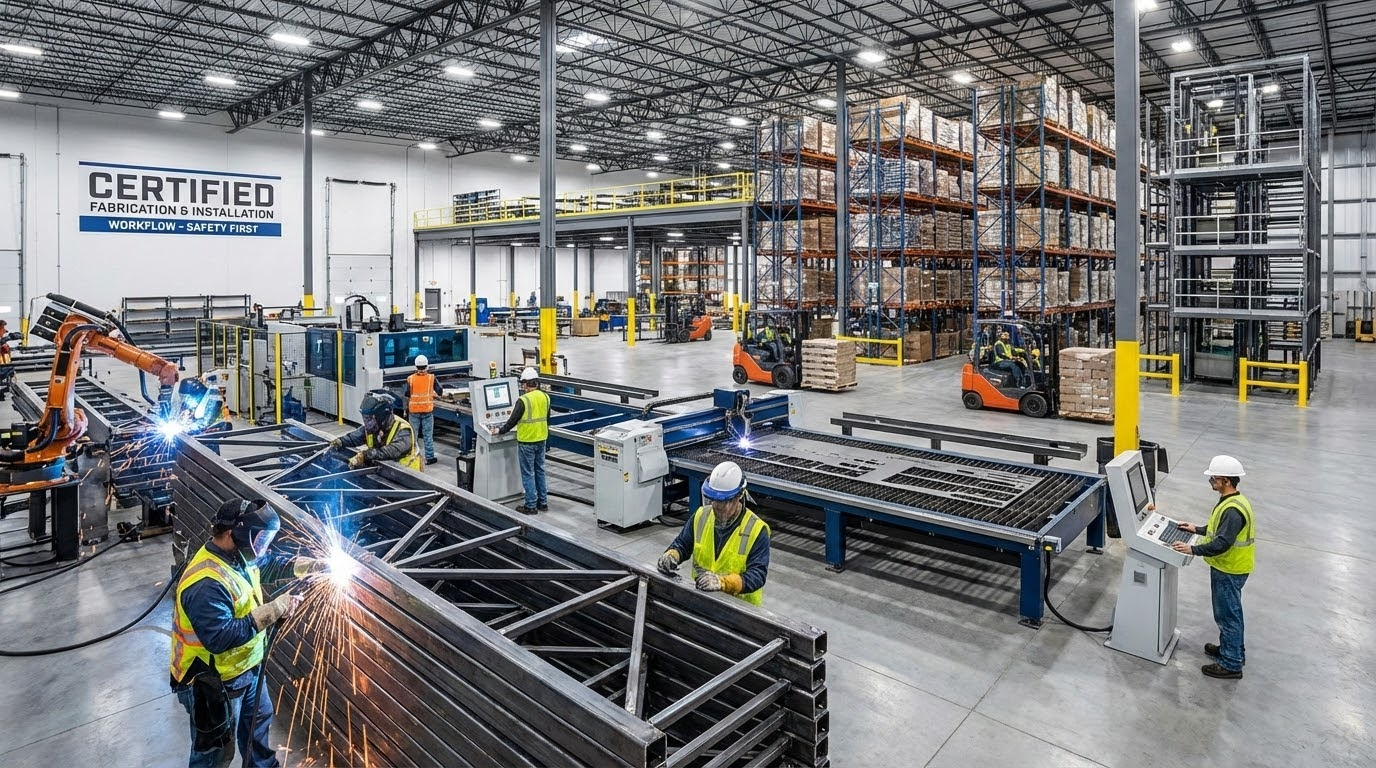
Commercial metal fabrication and installation are critical components in many industries, from construction to manufacturing. If you’re new to this topic, it’s important to learn what these processes involve and why they matter in delivering safe, efficient, and high-quality metal structures. This guide will introduce you to the basics of how commercial metal fabrication and installation workflows work, helping you understand their purpose and key elements without requiring prior expertise.
Understanding Commercial Metal Fabrication and Installation
Commercial metal fabrication is the process of cutting, shaping, assembling, and finishing metal components to create custom or standardized structures or parts used in various applications. Installation refers to the on-site assembly and securing of these fabricated metal elements into their final position within a building or facility. Together, the fabrication and installation workflow describes the step-by-step sequence of design, material preparation, fabrication stages (such as cutting, welding, and finishing), quality inspections, and the eventual delivery and installation at the project site.
Importance of Workflow in Metal Fabrication and Installation
Understanding the workflow of metal fabrication and installation is important because it ensures projects are completed safely, on time, and meet quality standards. An efficient workflow minimizes errors, reduces delays, and controls costs, which are vital in large-scale industrial and commercial projects. Proper installation also affects structural integrity and worker safety in warehouses, factories, and other facilities relying on metal frameworks and storage solutions. Clear workflows help all stakeholders, from designers to installers, collaborate effectively and comply with industry regulations.
Common Misunderstandings and Mistakes
One common misunderstanding is assuming that metal fabrication and installation are simple or interchangeable tasks. Many beginners overlook the complexity involved in coordinating multiple fabrication steps and the specialized equipment required. Another frequent mistake is underestimating the importance of safety protocols during installation, which can lead to accidents or structural failures. Additionally, people often neglect quality checks at different stages, which may result in costly rework or project delays. Lastly, ignoring how technology like CAD software or automation integrates into the workflow can limit efficiency and accuracy.
Industry Trends in Metal Fabrication
The metal fabrication industry is evolving with increased adoption of digital tools such as computer-aided design (CAD) and computer-aided manufacturing (CAM), which help streamline the workflow from design to production. Automation and robotics are becoming more common, improving precision and reducing manual labor. There is also growing emphasis on sustainability, with companies exploring eco-friendly materials and waste reduction strategies in fabrication processes. Safety standards continue to advance, driven by regulatory bodies and certification programs that ensure higher compliance and worker protection. These trends are shaping more efficient, safe, and environmentally responsible fabrication and installation workflows.
High-Level Approaches to Workflow Types
Traditional manual workflows rely on skilled craftsmanship and hands-on coordination across phases such as cutting, welding, and finishing. This method offers flexibility but may lack efficiency and consistency. Semi-automated workflows incorporate digital tools like CAD/CAM software for design and programming, combined with manual fabrication steps, enhancing accuracy and reducing errors. Fully automated workflows leverage robotics and advanced machinery to perform fabrication and assembly with minimal human intervention, optimizing speed and repeatability but requiring significant upfront investment and technical expertise. Hybrid approaches blend manual and automated elements tailored to project complexity and volume, balancing customization and speed.
| Workflow Type | Advantages | Disadvantages | Best For |
|---|---|---|---|
| Traditional Manual | High flexibility, lower initial costs | Time-consuming, prone to human error | Small projects, custom fabrication |
| Semi-Automated | Improved precision, faster turnaround | Requires skilled operators and software setup | Medium-volume, precision-critical |
| Fully Automated | High speed, consistent quality, labor saving | High capital costs, complex maintenance | Large-scale, repetitive production |
| Hybrid | Balanced efficiency and customization | Complexity in workflow management | Projects requiring both flexibility and scale |
Criteria for Evaluating Metal Fabrication and Installation Workflows
When evaluating metal fabrication and installation workflows, consider the following criteria:
1) Project Scale and Complexity: Larger, more complex projects benefit from automation and digital integration, while smaller jobs may favor manual workflows.
2) Accuracy and Quality Control: Assess how each approach manages precision and inspections during fabrication to reduce rework.
3) Lead Time and Throughput: Determine your time constraints and how workflow automation can optimize scheduling and delivery.
4) Cost Implications: Examine upfront investment, operational costs, and potential ROI without focusing solely on price.
5) Workforce Skillset: Consider your team’s capabilities and training requirements needed for specialized equipment or software.
6) Safety and Compliance: Evaluate which workflows incorporate rigorous safety protocols and regulatory adherence.
7) Flexibility and Scalability: Analyze how adaptable the workflow is to evolving project needs or volume fluctuations.
Case Study: Hybrid Workflow Success
A mid-sized distribution company needed to upgrade its metal racking installations to support growing inventory demands. Initially, they relied on manual fabrication and onsite installation, which caused delays and occasional quality issues. By integrating semi-automated CAD/CAM design tools with a professional installation crew, they improved fabrication accuracy and streamlined workflows without fully automating, maintaining necessary customization. This hybrid approach reduced project time by 25% and enhanced structural reliability, supporting safer and more efficient warehouse operations.
Frequently Asked Questions
Q: How do I decide between manual and automated metal fabrication workflows?
A: Consider the project size, budget, required precision, and available workforce skills. Manual is suitable for small, low-volume projects; automation benefits large, repetitive tasks.
Q: What role does digital software play in fabrication workflows?
A: CAD/CAM software enhances design accuracy, allows for easier iterations, and can generate machine instructions, reducing errors and speeding fabrication.
Q: How important is safety integration in installation workflows?
A: Critical. Proper safety protocols minimize risks during handling and assembly, ensure regulatory compliance, and protect workers and installed structures.
Q: Can hybrid workflows provide both customization and efficiency?
A: Yes, combining manual and automated steps allows tailored fabrication with enhanced throughput, balancing flexibility and speed.
Q: What are common pitfalls when shifting to more automated workflows?
A: Challenges include upfront costs, staff training requirements, maintenance complexity, and ensuring software-hardware compatibility.
Why Choose Success Installations?
Success Installations stands out as the premier provider for large-scale racking installation owing to our unparalleled combination of decades-long industry expertise, certified professional crews, and direct leadership access. Unlike other providers, our direct partnership with North American Steel guarantees manufacturer-direct pricing, highest quality structural materials, and rigorous compliance with industry safety and durability standards. Our unique ability to deliver end-to-end solutions—from custom engineering design and automation integration to flawless installation—ensures unmatched precision, reliability, and efficiency in every project. Leading brands like Ford and Mercedes trust us because we deliver not just storage systems, but optimized infrastructure that scales with your business demands seamlessly.
Our pricing reflects the comprehensive value we deliver through premium-grade materials, certified safety compliance, and highly skilled installation teams, which together minimize long-term maintenance costs and downtime. The investment in Success Installations equates to durable, efficient storage solutions engineered to maximize warehouse space and operational flow, reducing costly rework or delays commonly seen with lower-tier providers. Moreover, strategic sourcing from North American Steel helps control costs while maintaining strict quality standards, ensuring you pay for true value and lasting performance rather than just upfront expense.
To alleviate decision risk and instill full confidence, Success Installations provides a transparent consultation process led directly by founder Peter Boland, offering tailored project assessments and clear timelines. Our certified crews adhere to strict safety protocols to guarantee compliance and minimize on-site incidents. We back our work with industry-standard warranties and proactive maintenance services designed to extend the lifespan of your racking systems. Additionally, our callback commitment ensures you receive responsive support within 24 hours, providing ongoing assurance from project inception through completion and beyond.
Don’t compromise your warehouse’s efficiency and safety—hire Success Installations for proven, industry-leading racking solutions. Call (613) 790–9112 now to schedule your personalized consultation with Peter Boland or email sales@successinstallations.com to start your project planning. Secure your facility’s future storage capacity with a trusted provider dedicated to precision, durability, and exceptional service.