When managing warehouse storage or industrial inventory, efficiently organizing materials is a critical task. Many businesses turn to pallet racking systems as a solution, especially custom industrial pallet racking, which offers tailored designs to fit unique space and load needs. This article provides a foundational overview of what custom industrial pallet racking systems are and explores their significance in warehouse operations.
Understanding Custom Industrial Pallet Racking Systems
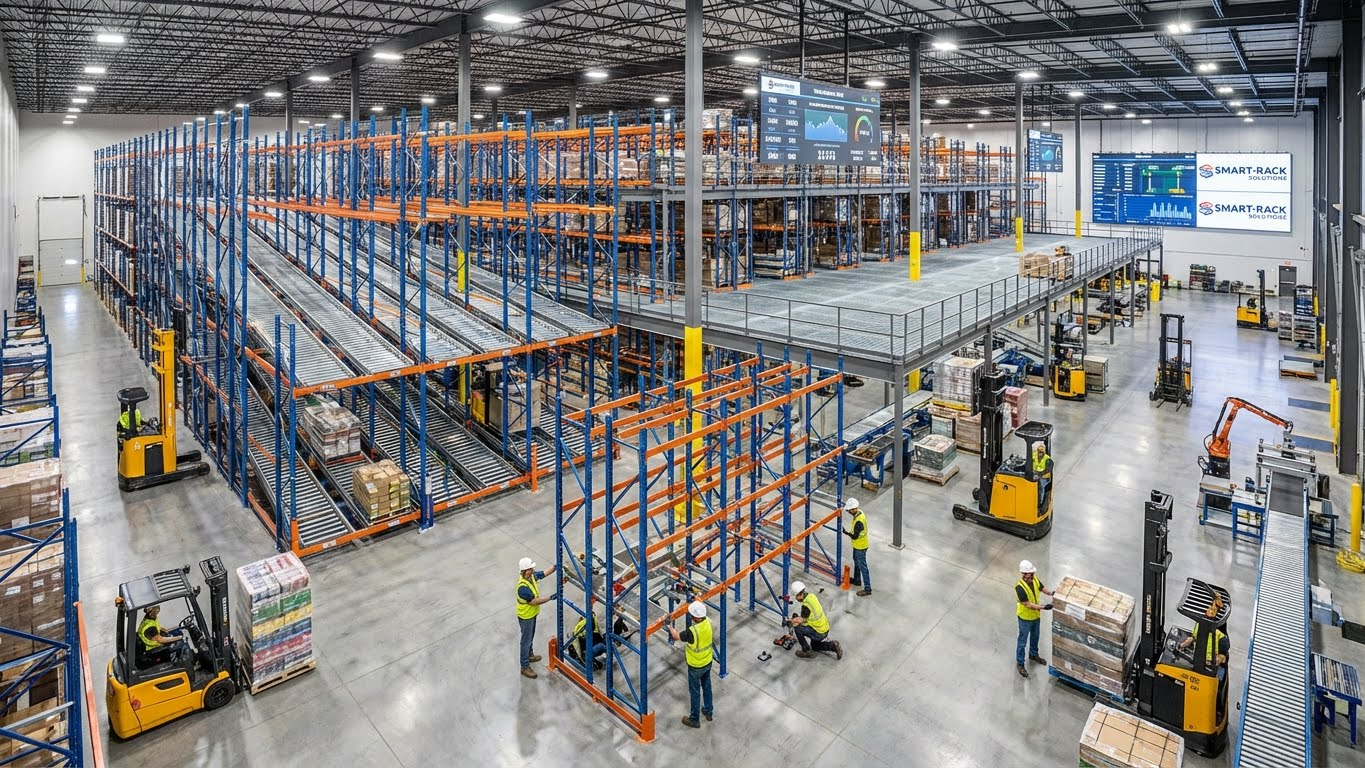
Custom industrial pallet racking systems are specially designed frameworks used to store pallets and heavy inventory within warehouses or industrial facilities. Unlike standard, off-the-shelf racks, these systems are engineered to meet specific spatial layouts, loading requirements, and operational workflows. They typically consist of steel frameworks that support various types of racks such as selective, drive-in, push-back, or pallet flow racks, customized to optimize vertical and horizontal storage capacities.
Properly designed custom pallet racking systems allow warehouses to maximize storage density, improve inventory accessibility, and enhance safety. By tailoring racking configurations to the unique characteristics of a warehouse—including product sizes, load weights, and handling equipment—businesses can reduce wasted space, streamline operations, and support smoother material handling. Beyond space optimization, customized racking solutions help ensure compliance with safety standards, protect inventory, and contribute to overall operational efficiency.
Common Mistakes in Pallet Racking Selection
Many beginners assume that all pallet racking systems are interchangeable or that standard racks will fit every warehouse without modification. This misunderstanding can lead to inefficient use of space, safety risks, or costly retrofits. Another common error is neglecting to consider load capacities and structural integrity during the design phase, which can result in rack failure. Overlooking maintenance schedules or ignoring compliance regulations are additional pitfalls that affect long-term durability and safety.
Emerging Trends in Warehouse Racking Systems
Increasingly, warehouses are adopting technology-driven innovations such as integration of pallet racking systems with warehouse management software and automation equipment. There is a growing emphasis on designing racking solutions that accommodate robotics and IoT sensors to enable real-time inventory tracking and retrieval optimization.
Sustainability is also gaining attention, with a focus on eco-friendly materials and modular designs that facilitate reconfiguration and extend rack lifespan. Furthermore, compliance with evolving safety standards remains a top priority for the industry.
Types of Custom Industrial Pallet Racking Systems
Custom industrial pallet racking systems generally fall into several high-level categories based on their design and operational focus:
- Selective Racking: Offers straightforward access to every pallet, ideal for flexibility and diverse inventory;
- Drive-In and Drive-Through Racking: Maximize storage density by allowing forklifts direct access into rack lanes, suited for bulk storage with less SKU variety;
- Push-Back and Pallet Flow systems: Utilize gravity-driven mechanics for efficient inventory turnover using LIFO or FIFO methods, beneficial for perishable or fast-moving goods;
- Mezzanine and Rack Buildings: Integrate racking into multi-level structures to expand usable space without increasing footprint;
- Cantilever Racking: Addresses specific needs for long or bulky items;
- Automated Shuttle Systems: Emphasize high-density storage combined with mechanized pallet movement for efficiency and reduced labor.
Each type can be customized to warehouse dimensions and load requirements, reflecting differing priorities like accessibility, density, automation, or SKU management.
Comparison of Racking Types
| Racking Type | Access Pattern | Storage Density | Best Use Case | Pros | Cons |
|---|---|---|---|---|---|
| Selective Racking | Direct, full access | Moderate | Warehouses with diverse SKUs | Easy pallet access; flexible configuration | Lower storage density compared to compact types |
| Drive-In/Drive-Through | LIFO storage, forklift access inside lanes | High | Bulk storage with fewer SKUs | Maximizes space utilization; cost-effective | Limited SKU variety; LIFO might not suit all inventory |
| Push-Back | LIFO, gravity-fed lanes | High | High-volume pallets with fewer SKUs | High density; faster loading/unloading | LIFO limits inventory rotation options |
| Pallet Flow | FIFO, gravity-fed lanes | High | Perishable or time-sensitive inventory | Efficient stock rotation; reduces manual handling | Complex installation; higher maintenance needs |
| Mezzanine & Rack Buildings | Multi-level integrated | Variable | Space-constrained facilities needing vertical expansion | Maximizes vertical space; customizable | Higher structural and safety considerations |
| Cantilever | Open front for bulky items | Moderate | Long, irregularly shaped inventory | Easy access to long items; customizable arms | Limited to specific product types |
| Shuttle Systems | Automated pallet movement | Very High | High-volume facilities prioritizing automation | Reduces labor; high density; fast retrieval | Higher upfront complexity; technology dependency |
Key Factors When Evaluating Custom Pallet Racking Systems
When evaluating custom industrial pallet racking systems, businesses should consider:
- Storage Density Requirements: How much vertical and horizontal space is available and how intensively it should be used;
- Inventory Characteristics: SKU variety, pallet sizes, weights, and turnover rates to determine suitable access patterns (FIFO vs. LIFO);
- Operational Workflow: Material handling equipment compatibility and frequency of pallet access;
- Safety and Compliance: Adherence to relevant warehouse, industrial safety, and building codes;
- Flexibility & Scalability: Ability to adapt to changing inventory types or expansion needs;
- Integration Potential: Compatibility with warehouse management systems and automation technology;
- Maintenance & Durability: Structural strength, ease of inspection, and long-term upkeep requirements;
- Budget Constraints and ROI Expectations: While not focusing on pricing alone, assess balance of cost versus operational benefits.
Evaluating these factors holistically helps select the right approach that aligns with current and future warehouse demands without compromising safety or efficiency.
Case Study: Improving Warehouse Efficiency with Custom Racking
A mid-sized North American distribution center specializing in perishable foods faced challenges with product spoilage and poor space utilization due to outdated racking. They transitioned from selective racking to a combination of pallet flow systems for FIFO management of perishables and mezzanine platforms to increase vertical capacity. The result was a measurable improvement in inventory rotation, reduced product spoilage, and efficient use of existing warehouse footprint without expanding physical space. This balanced approach addressed both storage density and inventory turnover needs, illustrating how hybrid custom solutions can align with operational goals.
Frequently Asked Questions (FAQs)
Q: How do I determine whether FIFO or LIFO inventory management suits my warehouse?
A: Consider your product’s shelf life and turnover rate. Perishable or time-sensitive goods benefit from FIFO systems like pallet flow, while durable goods with lower turnover can often use LIFO methods such as push-back or drive-in racking.
Q: Can customized racking systems be reconfigured as my business grows?
A: Many custom solutions prioritize modular components allowing reconfiguration or expansion, but this depends on initial design considerations and system type.
Q: What safety standards should custom industrial racking comply with?
A: Compliance with OSHA regulations, local building codes, and industry-specific standards is critical. Regular inspection and maintenance extend system safety over time.
Q: How does automation integration impact pallet racking selection?
A: Automation may require specialized system designs (like shuttle systems) that accommodate robotic or conveyor interfaces, influencing upfront design choices.
Q: Are gravity-fed systems more maintenance-intensive?
A: Generally, yes. Components like rollers and rails require periodic inspection and upkeep to maintain smooth flow and safety.
Why Choose Success Installations for Your Warehouse Racking Needs?
Success Installations stands apart as North America’s premier large-scale racking installation provider by combining over two decades of expert leadership with a certified, professional crew dedicated to safety, precision, and transparent communication. Our founder’s direct involvement ensures unmatched reliability and tailored service, while our exclusive partnership with North American Steel guarantees manufacturer-direct sourcing of premium steel storage solutions trusted by industry leaders such as Ford and Mercedes.
We deliver comprehensive, end-to-end project support—from custom design and engineering to seamless installation—backed by rigorous safety and quality certifications, making complex high-volume warehouse storage efficient and future-proof.
Our pricing reflects the value of durable, high-performance racking systems engineered to optimize your warehouse’s capacity, workflow, and safety while minimizing downtime and costly maintenance. By choosing Success Installations, you invest in robust steel construction, precise customization for your unique operational needs, and integration-ready solutions that foster scalability as your business grows, ensuring a strong return on investment through enhanced inventory management and long-term reliability. We focus on delivering cost-effective, configurable solutions that reduce total cost of ownership while maximizing storage density and accuracy.
We mitigate your risk with transparent project consultations, direct access to our founder for any concerns, and adherence to the highest safety and quality standards certified by leading regulatory bodies. Success Installations offers detailed planning and site assessments upfront, supported by proven methodologies and a highly experienced crew to ensure flawless execution. Our commitment includes comprehensive post-installation support and maintenance guidance to guarantee longevity and compliance. Additionally, our prompt response guarantee ensures you receive expert assistance within 24 hours, giving you confidence and peace of mind from start to finish.
Get Started Today
Ready to maximize your warehouse efficiency with industry-leading custom racking solutions? Contact Success Installations today to schedule your personalized consultation directly with Peter Boland at (613) 790–9112 or email sales@successinstallations.com. Let us help you transform your storage operations with the most trusted and durable solutions in North America—start your project now!